
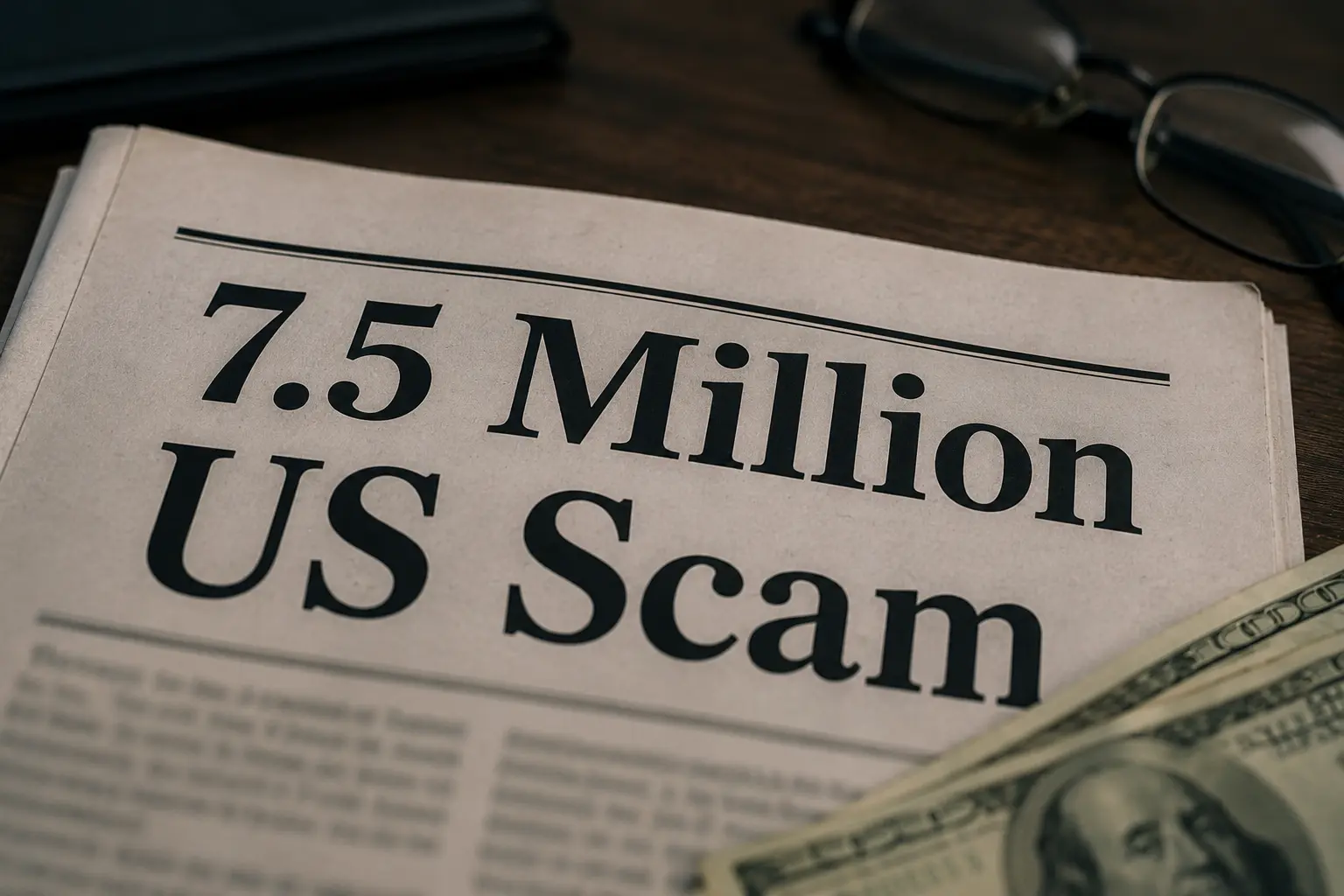
A 21-year-old Indian national from Gujarat, Jay Sunil bharti Goswami, has been arrested in Canada over his alleged involvement in a multimillion-dollar fraud scheme that targeted elderly people across the United States. According to US authorities, Goswami allegedly worked as a money mule, collecting cash and gold from victims and transferring the valuables to other members of the criminal network.
Alleged Role in the Fraud
US prosecutors say the investigation began in January 2026 after the IRS Criminal Investigation Division uncovered an internet- and telephone-based fraud operation targeting elderly victims in New York and other parts of the country.
The alleged scammers reportedly contacted elderly people and falsely claimed that their bank accounts, money or personal information had been compromised. Victims were then persuaded to convert their assets into cash, gold or gift cards. The fraudsters allegedly impersonated law-enforcement officials or other authorities to make the deception appear legitimate.
When victims handed over cash or gold, members of the network known as “money mules” allegedly collected the valuables and delivered them to other participants in the scheme.
Authorities allege that Goswami participated in at least nine such incidents involving elderly victims in New York and New Jersey. The victims were reportedly between 59 and 87 years old and collectively lost approximately $7.56 million.
Investigation Into Goswami’s Finances
The criminal complaint also alleges that Goswami opened a Bank of America account and deposited more than $90,000 in cash between August 2025 and April 2026. Investigators believe these deposits were consistent with payments he received for his alleged role as a money mule.
The allegations illustrate how sophisticated fraud networks can operate through multiple layers. Instead of every participant communicating directly with victims or handling stolen money themselves, criminals may rely on intermediaries to collect and move assets, making investigations more difficult.
Arrest in Canada
Goswami’s legal troubles escalated after he appeared before US Magistrate Judge Mark Pedersen on August 17, 2026. He was released under conditions but allegedly crossed from the United States into Canada the following day.
US authorities subsequently learned that he had booked a flight from Toronto to Doha, Qatar. Canadian authorities detained him at Toronto Pearson International Airport on August 18 and arrested him on August 20 following a US request for provisional arrest pending extradition proceedings.
Goswami faces charges including wire fraud, conspiracy to commit wire fraud, money laundering and conspiracy to commit money laundering. The charges carry a potential maximum sentence of 20 years in prison. However, these are allegations, and the defendant remains entitled to due process and the presumption of innocence unless proven guilty in court.
Why Elderly People Are Targeted
The case also highlights the growing sophistication of scams aimed at senior citizens. Fraudsters frequently exploit fear, urgency and trust. By claiming that a victim’s savings are at risk or that the person is connected to a criminal investigation, scammers can pressure victims into making financial decisions they would otherwise avoid.
The alleged scheme involving Goswami reportedly combined telephone and internet deception with impersonation of officials. The use of cash and gold further demonstrates how criminals can move beyond conventional online bank transfers.
A Cross-Border Criminal Investigation
The case demonstrates the international nature of modern financial fraud. The alleged victims were in the United States, Goswami is from Gujarat and had been living in New Jersey, while his attempted departure reportedly involved Canada and a flight to Qatar.
The investigation involved the IRS Criminal Investigation Division, along with law-enforcement agencies in New York and New Jersey. Canadian authorities became involved after US officials requested Goswami’s provisional arrest for extradition.
Such cases show why international cooperation is increasingly important in combating organised financial crime. Criminal networks can exploit borders to move people, money and assets, making coordination between different countries’ law-enforcement agencies essential.
A Warning for Senior Citizens
The alleged $7.5 million fraud is a reminder that elderly people remain particularly vulnerable to sophisticated financial scams. People should be cautious whenever someone unexpectedly claims to be a police officer, government official, bank employee or investigator and demands immediate payment or access to financial assets.
Legitimate authorities do not normally require people to hand over their life savings in cash, gold or gift cards to protect their money. Any unexpected demand of this nature should be independently verified through official channels before action is taken.
The case against Jay Sunil bharti Goswami is still proceeding, and the allegations have yet to be tested in court. Nevertheless, the investigation underscores the enormous financial and emotional damage that organised elder-fraud schemes can cause—and the increasingly international effort required to bring alleged participants to justice.
-

Shivam Associates Belgaum Scam: What Happened and What Investors Should Know
The Shivam Associates scam in Belgaum, Karnataka, has become a major financial controversy, leaving thousands…
-
ED Arrested Utkarsh Chandrakar, CGPSC Recruitment Scam
The Enforcement Directorate just locked up Utkarsh Chandrakar in the massive CGPSC recruitment scam. Federal…
-

₹504 Crore Haryana Funds Scam: How Public Money Allegedly Moved From Government Accounts to Luxury ‘Favours’
A government account is supposed to be one of the safest places for public money…
